
The relationship between political leaders and religious figures has always been one of the most delicate and closely watched conversations in the world. Throughout history, presidents, kings, and governments have often found themselves facing criticism or guidance from spiritual leaders who believe they have a responsibility to speak on issues affecting humanity. That difficult balance between faith and politics has once again captured global attention after a public disagreement between Pope Leo and President Donald Trump sparked a broader debate about leadership, morality, and the role of the church in modern society.
The controversy began after Donald Trump publicly criticized Pope Leo through his Truth Social platform, questioning the pope’s views on crime, foreign policy, and international issues. The remarks immediately drew worldwide attention because disagreements between a U.S. president and the leader of the Catholic Church are rare moments that carry significance far beyond a simple political dispute. The exchange quickly became a conversation about whether religious leaders should challenge political decisions and whether elected officials should respond when they face criticism from figures outside government.
While Trump’s comments were direct and forceful, Pope Leo chose a different approach. Speaking with reporters during a flight to Algeria, the 70-year-old pontiff responded calmly, making it clear that he did not intend to enter a political battle but would continue speaking about what he believes is the mission of the church. Rather than focusing on personal conflict, Pope Leo emphasized his responsibility to communicate the message of the Gospel and address issues such as peace, justice, and human dignity.
“I have no fear of the Trump administration, or speaking out loudly of the message of the Gospel, which is what I believe I am here to do,” Pope Leo said, making clear that his role is not defined by whether political leaders agree with him. His response reflected a long tradition within the Catholic Church of maintaining a moral voice independent from political power.
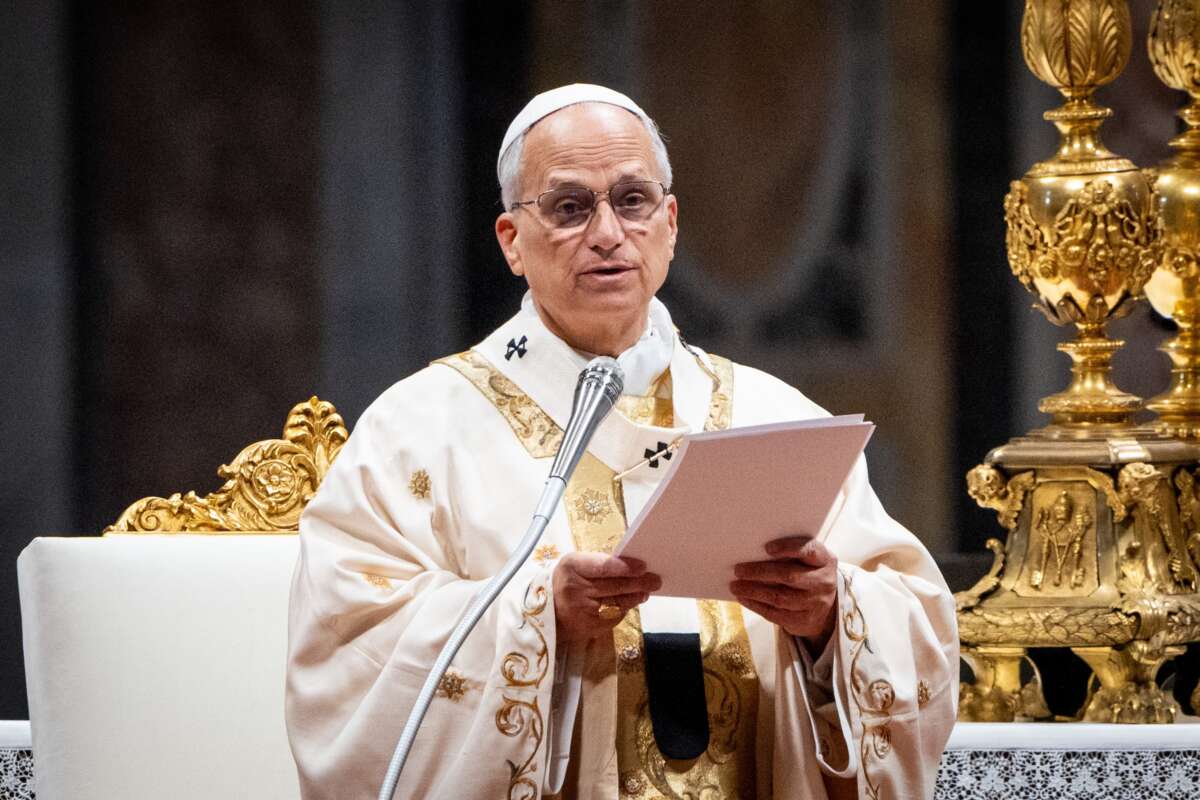
The pope also took care to explain that his comments were not intended as personal attacks against anyone. He emphasized that when the church speaks about social issues, the goal is not to target individuals but to address broader questions affecting people around the world. For Pope Leo, speaking about war, peace, poverty, and international cooperation is part of the responsibility of religious leadership rather than a political campaign.
The disagreement began after Trump described Pope Leo as “weak on crime” and criticized his views on foreign policy. Trump argued that he did not want a pope who criticized the decisions of the U.S. president, stating that he was elected to carry out the policies supported by his voters. He also compared Pope Leo with his brother Louis, whom Trump praised as being more aligned with the MAGA movement.
The comments created a strong reaction because they represented a direct clash between two very different forms of authority. Trump’s influence comes from political power, elections, and a large base of supporters. Pope Leo’s influence comes from religious leadership and the global reach of the Catholic Church. Both figures represent millions of people, but they operate from completely different foundations.
For Trump’s supporters, his criticism was viewed as a defense of elected leadership. They argue that presidents have a responsibility to make decisions based on the priorities of voters and should not be influenced by outside institutions. From this perspective, criticism from religious leaders can be seen as an attempt to interfere with political decision-making.
For supporters of Pope Leo, however, the pope’s response represented the traditional role of religious leadership: speaking about moral issues even when those views conflict with powerful governments. They argue that faith leaders throughout history have challenged political authorities when they believed certain actions threatened peace, justice, or human dignity.

This disagreement reflects a much larger question that has existed for centuries: where should the line between religion and politics be drawn?
Some believe religious leaders should avoid political debates and focus only on spiritual matters. Others argue that religious teachings naturally involve issues such as poverty, war, human rights, and compassion, meaning religious leaders cannot remain silent when they believe fundamental values are at stake.
Pope Leo’s response suggested that he views the mission of the church as extending beyond traditional religious services. He emphasized the importance of speaking against war, encouraging diplomacy, and promoting cooperation between nations. He stated that he does not see himself as a politician and does not want to participate in personal arguments with political leaders.
“I do not look at my role as being political, a politician. I don’t want to get into a debate with him,” the pope explained, reinforcing his position that his focus remains on faith rather than political competition.
One of the most significant parts of Pope Leo’s response was his warning about the misuse of religious teachings. He suggested that the message of the Gospel should not be used as a tool for division or political advantage. This statement touched on a sensitive issue that has become increasingly important in modern society: the relationship between religious identity and political movements.
Across the world, debates continue about how faith should influence public life. Some believe religious values should play a central role in shaping laws and government decisions. Others believe religion and government should remain separate to protect both religious freedom and political independence.
The disagreement between Trump and Pope Leo became a symbol of that ongoing debate.

It also highlighted the changing nature of leadership in the modern world. Political leaders today operate in an environment where every statement can reach millions instantly. Religious leaders face similar challenges because their words can influence public conversations far beyond their own communities.
A single comment from a president or a pope can become an international headline within minutes.
The reaction to the dispute also shows how divided public conversations have become. Supporters on both sides often interpret the same event in completely different ways. One group may see a leader defending important principles, while another may see unnecessary confrontation. The meaning of the moment often depends on personal beliefs and values.
However, beyond the political arguments, the exchange reveals something deeper about the responsibilities of influential figures. Leaders are often judged not only by the decisions they make but also by how they respond when challenged. Some choose confrontation. Others choose patience and explanation.
Pope Leo’s approach was to avoid escalating the conflict. Instead of responding with personal criticism, he redirected attention toward the issues he believes matter most: peace, dialogue, and cooperation among nations.
This approach reflects the broader tradition of the Catholic Church, where popes have often attempted to serve as moral voices during times of global tension. Throughout history, popes have spoken about wars, humanitarian crises, poverty, and international conflicts, sometimes receiving praise and sometimes facing criticism from governments and political movements.
The current disagreement follows that same historical pattern.
A powerful political leader challenged the views of a religious leader.

The religious leader responded by reaffirming his mission.
And the world watched the conversation unfold.
Whether people agree with Trump’s criticism or Pope Leo’s response, the moment demonstrates how powerful the relationship between politics and faith remains. In a world facing conflicts, economic challenges, and social divisions, the voices of both political and religious leaders continue to shape public discussions.
The debate is unlikely to disappear because the questions behind it are much larger than two individuals.
What responsibilities do leaders have when they hold positions of influence?
Should moral voices challenge political decisions?
Can faith remain separate from politics when issues of human suffering are involved?
These questions have been debated for generations, and they will continue to shape conversations in the future.
For now, Pope Leo appears determined to continue the path he described: speaking about peace, encouraging dialogue, and defending what he believes is the true purpose of the church. He has made clear that disagreement with political leaders will not prevent him from expressing his views.
The clash between Pope Leo and Donald Trump may have begun with a few public statements, but the larger conversation it created is about something far more significant — the balance between power and principle, politics and morality, and the role of leaders in a divided world.
Because throughout history, the strongest voices are not always the loudest ones.
Sometimes they are the voices that remain calm, stay committed to their mission, and continue speaking even when doing so creates controversy.